

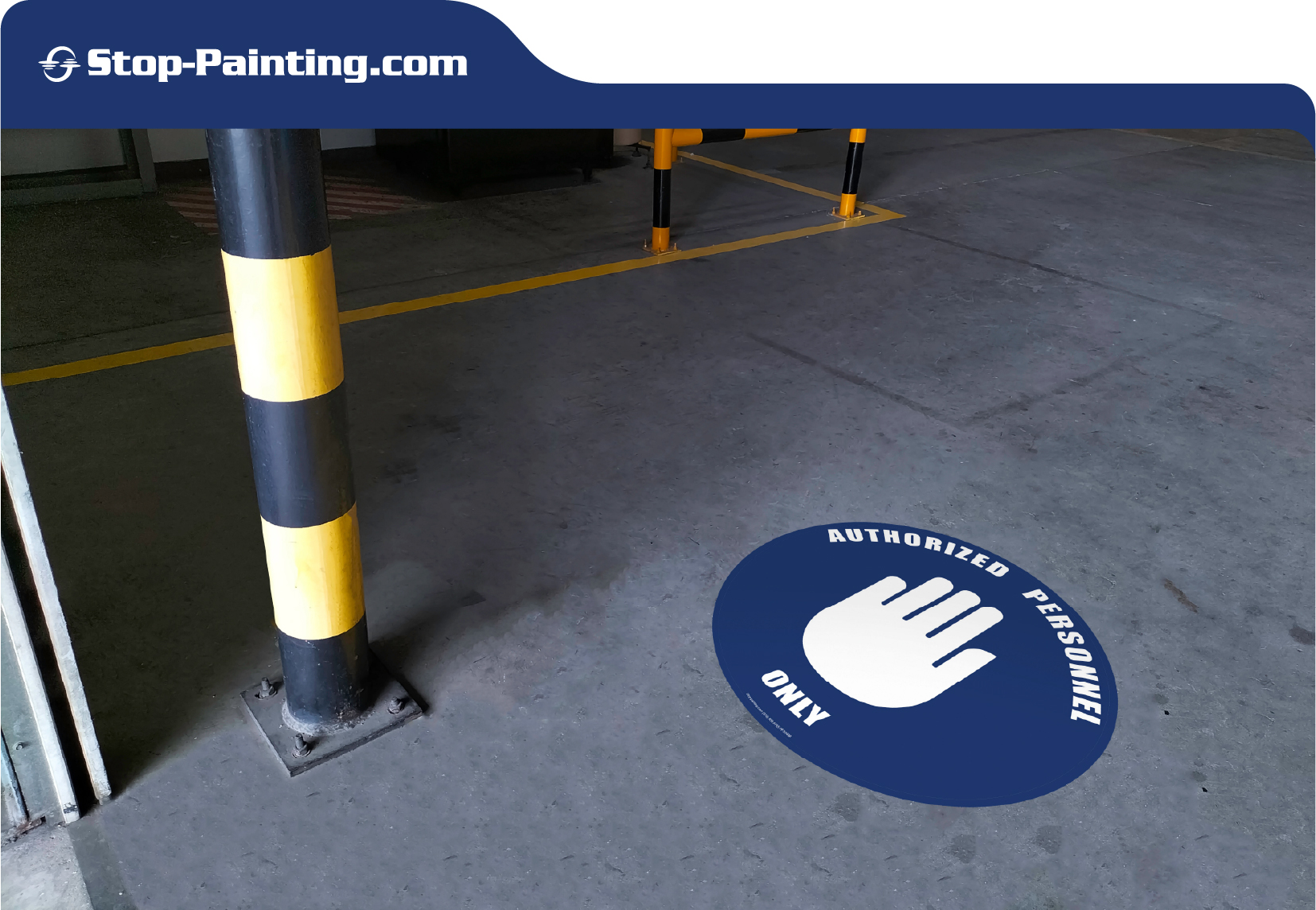
Floor tape, signage, and other visual cues marked with no-entry messaging can help prevent unauthorized access to restricted areas and improve facility safety. Limit access to PPE-required zones, keep customers out of a store’s back offices, or prevent unauthorized entry without the proper clearance. Our durable floor tape and signs come in designs that effectively communicate key no-entry or restricted-access messages with text, color, and graphics. Learn when to use and how to choose no-entry signage for your facility.
No Entry vs. Restricted Access
No-entry and restricted-access signs fulfill the same basic objective—to prevent unauthorized traffic or personnel from entering a specific area—but they are not interchangeable. The difference is that no-entry signs prohibit all traffic, while restricted access areas limit who is allowed entry. Additional text and graphics can differentiate between the two meanings and provide maximum security, safety, and efficiency.
When to Use No-Entry Signage
General no-entry or restricted-access signs are relevant across industries and situations and can be used for everything from designating public and private spaces to marking exit-only doors and paths. However, general no-entry signs may be insufficient or lack the necessary instruction for employees or visitors. Custom signs or those pre-printed with standard language and graphics are useful in instances when additional information or guidance is needed.
You can use no-entry signage to:
- Support PPE objectives by posting signs that give instructions about what gear is required and where it must be worn. Color-coded floor tape can outline the boundary of the areas where PPE is required.
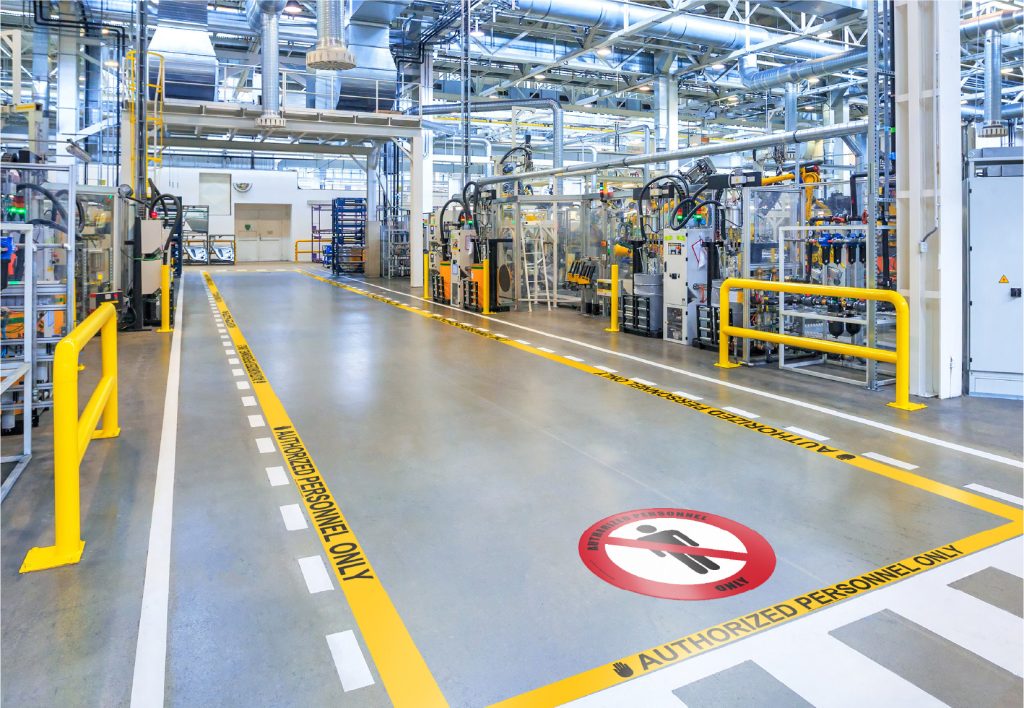
- Increase caution around sensitive machinery in industrial environments by limiting who is allowed. Repeating message tape and floor signs clearly mark boundaries and provide guidance about restricted access.
- Indicate pedestrian- or vehicle-only lanes with no-entry floor signs that visually communicate types of prohibited traffic.
- Create clarity in retail, commercial, and restaurant environments by marking kitchens, back offices, or storage spaces with no-entry signage that keeps customers out.
- Limit outside traffic to secure environments such as hospitals or schools with floor tape and signs that communicate that visitors must check in before proceeding. Install red tape printed with “STOP” language at the barrier to entry, and supplement that cue with custom signage that conveys your exact instructions.
Things To Consider When Choosing No-Entry Signage
There are several important factors to consider when choosing signage to identify restricted or no-entry areas and provide associated instructions.
Material & Durability
Different environments require different types of floor tapes and signage for maximum durability and long-term visibility. Our Superior Mark® repeating message floor tape features a highway-grade adhesive and patented beveled-edge design that’s ideal in indoor industrial environments and high-traffic areas. Superior Mark® is also available in glow-in-the-dark for low-light situations, in a hook-and-loop construction for carpeted floors, and in five-strip floor sign designs for high traffic areas.
Other types of floor tape and signage that might be appropriate for marking no-entry areas include:
- Virtual signs and lines may be useful if access restrictions change, such as in concert venues, theaters, or entertainment complexes.
- Pavement marking tapes are ideal for outdoor spaces, such as parking lots, airport exteriors and taxiways, and parking garages.
- Freezer tape is designed for use in cold storage areas or walk-in freezers, or to indicate no-entry areas in cold locations, such as loading docks.
Visual Cue Placement
Caution signs and messages should be placed as close to the hazard as possible, and the same guidance can apply to no-entry signage. Choose the best type of signage based on where and how it will be used: Floor tape can create a clear border around entrances to restricted areas or delineate the no-entry area itself, while floor marking signs provide visual cues at doorways or entrances to restricted areas.
No Entry and Supporting Graphics
The most commonly used symbol to signal “no entry” is a red circle with a white rectangle across its face. Other common symbols include the classic stop octagon or a hand extended with the palm forward. You may also see graphics associated with the specific risks present in a restricted area, such as warning triangles, no-forklift symbols, or ESD icons.
Color Requirements
The color of no-entry floor tape and signage may indicate the level of risk associated with that area and should comply with color standards established by ANSI and OSHA: red for danger, orange for warning, and yellow for caution. These colors are commonly associated with stopping or pausing, giving viewers a subconscious cue to the desired behavior.
Consider Other Products To Restrict or Prohibit Entry
Depending on your facility needs and floor plan, physical workplace essentials may be necessary to cordon off the restricted area. You may choose to supplement signage and visual cues with physical barriers to prevent unauthorized entry in areas without locked doors or other barriers. Delineator posts for outdoor and indoor use and perimeter markers are highly visible products that communicate restricted or prohibited access to no-entry zones.
No-entry signage improves facility safety by identifying restricted areas and providing essential context and instructions. For more on using floor marking products to support your facility’s objectives, explore our Resource Center.


