

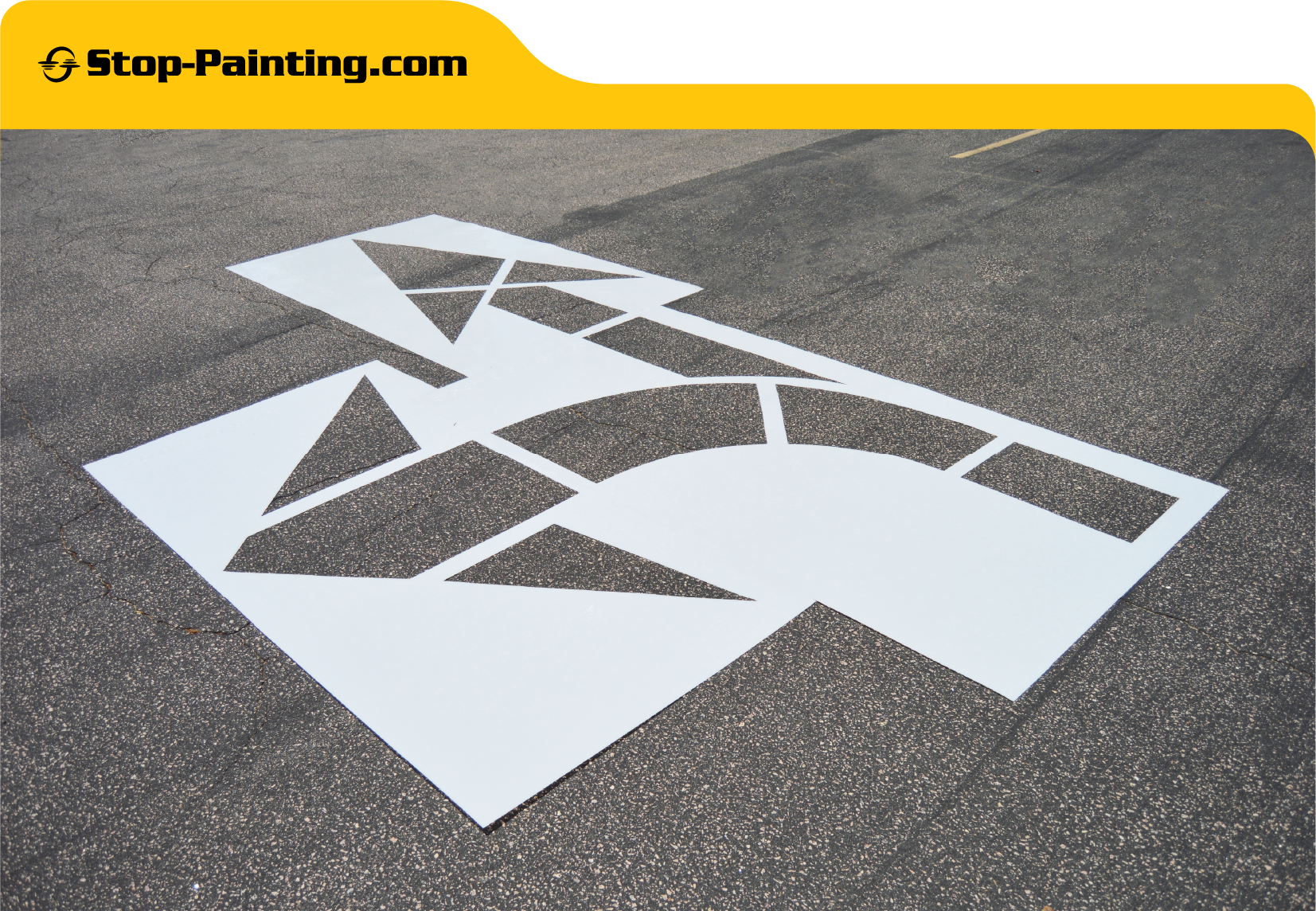
Many industrial facilities and property managers use paint and stencils to mark concrete floors and pavement. Knowing how to troubleshoot a range of stenciling issues can help prevent floor marking problems to help these visual cues last longer. Painting stenciled markings on concrete floors or pavement surfaces requires a multi-step process that involves significant prep and extended drying time. From fuzzy edges to flaky or peeling paint, this floor painting troubleshooting guide explores common stencil issues, their causes, and how to prevent or fix them.
How To Stencil Without Paint Bleeding

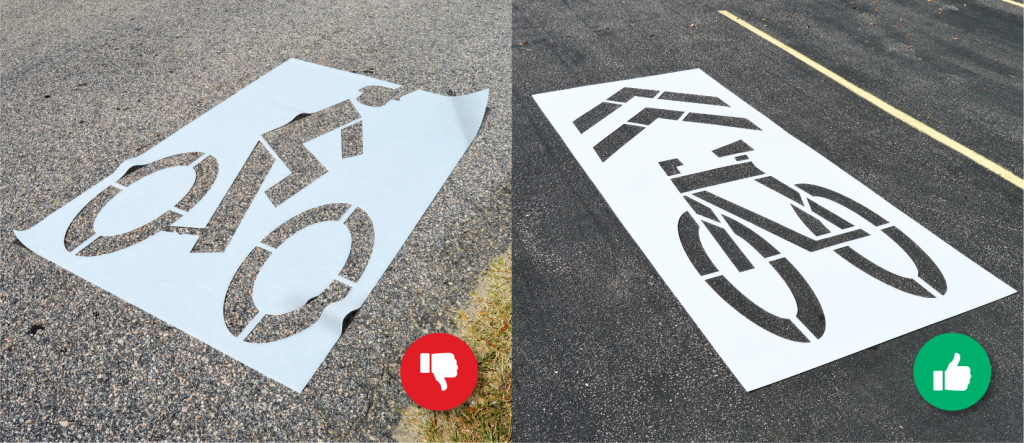
If your painted floor or pavement markings have blurry or bleeding edges, the most likely culprits are that your stencil doesn’t lay flat, that you have used too much paint, or that you have used improper paint application techniques. When using stencils on floors or pavement, follow these best practices to help you paint crisp, clear markings without fuzzy or bleeding edges.
- Ensure your stencil lays flat and is locked in place to avoid it moving while you’re painting.
- Don’t apply too much paint: Excess paint can seep under the edges of your stencil, which can cause fuzzy or bleeding lines.
- Using spray paint and a spray box helps achieve clear lines and crisp text or shapes.
- Explore our concrete painting guide for in-depth instructions on how to prepare your surfaces and stencil safety messages and symbols on floors within your facility.
- Always clean the stencil after use, let it dry completely, and store it flat.
- Store your stencils away from sunlight or heat to prevent curling or warping.
- Always handle the stencil with care to prevent bending and creasing the material to ensure it lays flat during use.
Note that many of our pavement and floor marking stencils ship rolled, but the stencils are easy to flatten again. If your stencil is new or has been stored rolled, simply unroll the stencil, lay it flat, and add weight on top to allow it to flatten before use. Storing stencils flat helps reduce the need for this step.
Why Does Floor Paint Flake and Peel?
The most probable reason for stenciled markings that peel or flake is that the surface was not properly prepared: Paint can’t adhere to slick surfaces—such as sealed, coated, or polished concrete or sealed pavement. Similarly, concrete with grease or oil stains will resist proper adhesion of painted lines and markings. If your stenciled floor markings are peeling or flaking, consider these solutions for fixing the problem, or preventing the issues in the first place.
How To Prevent Stenciled Floor Markings from Flaking
Thoroughly evaluate your surface before proceeding with your preferred floor marking method. Even newly laid concrete must be properly prepared—through shot blasting, grinding, scarifying, or acid etching—to facilitate paint adhesion. Sealed concrete inhibits paint adhesion, so any floor sealants or coatings must be removed before paint is applied.
In areas where floor markings are subject to high traffic, floor markings are likely to fail sooner, so always ensure you have selected the correct type and grade of paint for your intended application area. Once your surface preparation efforts are complete, paint a test patch to ensure the paint adheres properly, and address any surface concerns before applying your stenciled floor markings.
How To Fix Peeling Stenciled Floor Paint
If your floor paint application begins to flake or peel, there are a few steps you must take before re-applying painted floor markings. Never put more paint over flaking or peeling lines or markings as it will contribute to another early failure. The only solution is to restart the application process, beginning with removing the peeling paint and preparing the floors, before applying new paint.
Before reapplying your stenciled floor markings, determine what caused your paint to peel. The cause may be general wear, exposure, improperly prepared floors, or applying the wrong type of paint, among other reasons.
Troubleshooting Faded Floor Paint
Painted visual cues will inevitably fade over time, whether it’s floor paint applied in indoor areas subject to heavy traffic or parking lot and pavement paint applied outdoors in areas exposed to sun and weather. Most painted floor markings typically last one to two years before fading. However, if your painted markings are fading more quickly, it may be because the paint didn’t have adequate time to dry. To prevent fading, allow proper dry time for painted markings. Epoxy paint can take a surprisingly long time to dry. While each brand offers its own recommendations, generally, you’ll need to allow several days for the paint to dry before reopening the area to foot or vehicle traffic. Also ensure you have chosen the correct type of paint for your application area and expected type and volume of traffic.
Install Floor Marking Alternatives
For an alternative to traditional warehouse floor painting, you may install Superior Mark® floor tape or pavement marking tape or signs instead. If preparing, painting, and repairing painted lines is eating away at your budget and time, consider these more durable, cost-effective methods available for marking floors and pavement in warehouses and industrial facilities:
- Superior Mark® floor tape or signs will not fade or chip, so they’re ideal for marking floors in high-traffic areas, especially in warehouses, factories, and other industrial environments.
- Pavement tape is designed for parking lots and other outdoor areas where traditional floor tapes are insufficient; we offer both temporary and permanent pavement marking solutions to suit your needs.
- Custom floor markings with your choice of text, colors, and graphics allow you to create specific, precise messaging to suit your facility’s needs.
Our top-quality industrial floor and pavement marking stencils and epoxy paint are designed to deliver crisp, clear lines and markings when proper application methods are used. For alternatives to painting, Superior Mark® floor marking tape and signs and removable or permanent pavement tapes can extend the lifespan of markings on concrete floors, parking lots, and beyond. For more on choosing, applying, and troubleshooting industrial and warehouse floor marking products, explore our Resource Center.


